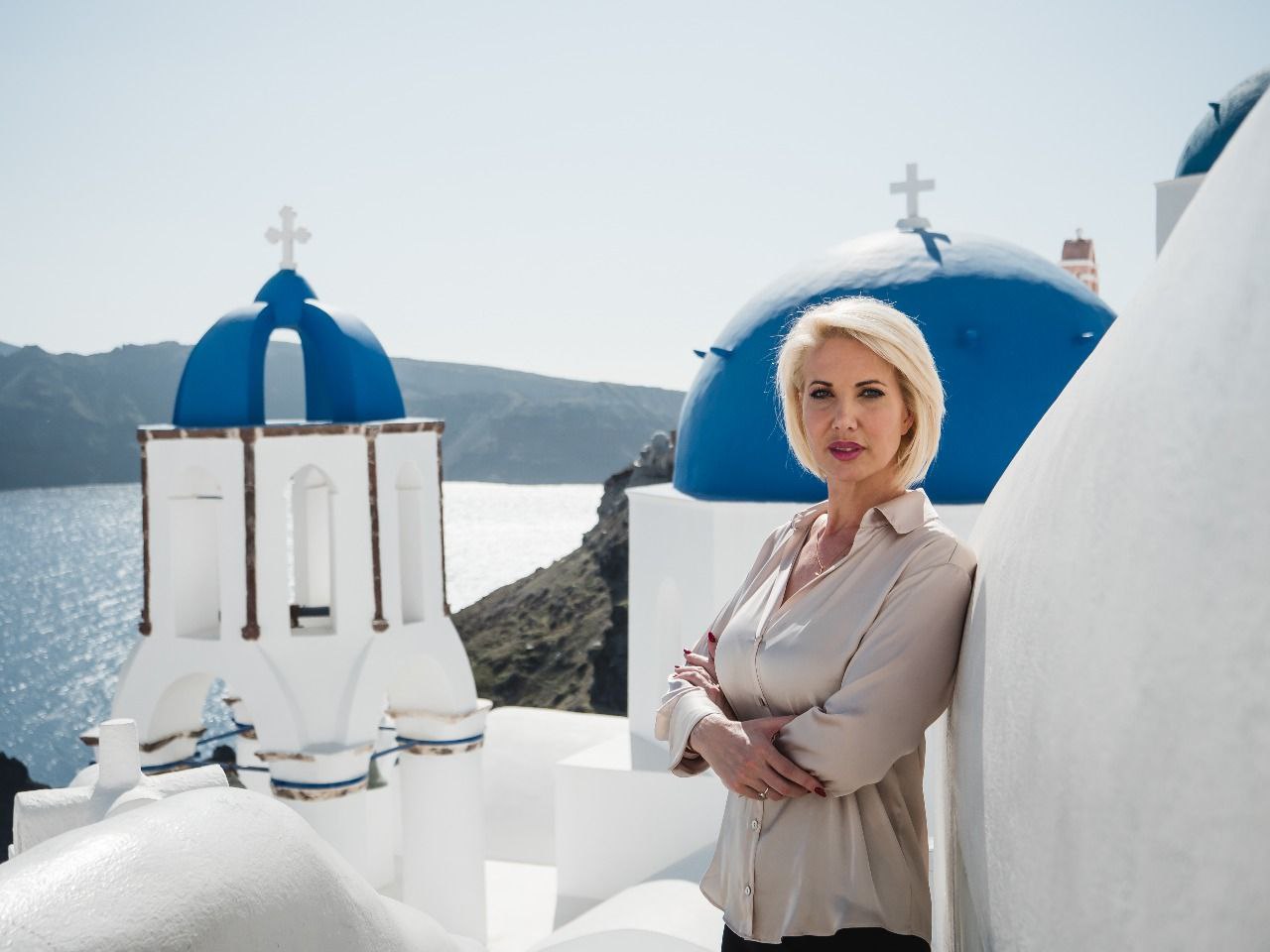
Katerina Monogiou emphasizes that Greece stands at a pivotal crossroads, where the choices made today will determine the nation’s future strength and resilience. With New Democracy’s clear vision centered on economic stability, social cohesion, and national security, she underscores the importance of building a state that is both competitive and inclusive. As the elected representative of the Cyclades, she is deeply committed to ensuring that the islands are not only heard but also actively shaping the country’s progress. Monogiou believes that Greece’s advancement depends on unity, hard work, and forward-thinking policies that create opportunities for every citizen, regardless of region or background. For her, politics is not a series of formalities, speeches, or legislative procedures, but a meaningful journey with a purpose—to leave a positive impact, step by step. Through dedication and collaboration, she envisions a Greece ready to embrace the challenges ahead and thrive with confidence.
Can you share your journey into politics and what inspired you to become a Member of Parliament for the Cyclades?
My journey into politics has been guided by my deep love for the Cyclades and a firm commitment to serving the community. I have always believed that politics should be about improving people’s lives, solving real problems, and ensuring a better future for the coming generations. Coming from the world of business and social action, I had the opportunity to observe up close the challenges our islands face—whether in infrastructure, healthcare, tourism, or economic development.
The principles of New Democracy—progress, stability, and development—resonate with me fully. When I was given the chance to represent the Cyclades in Parliament, I saw it as my opportunity to be a strong voice for my region, to push for real solutions, and to work for a modern Greece that offers opportunities to all its citizens. My political career is a mission I serve with passion and a sense of responsibility every day.
As a member of the New Democracy Party, how do you align your political beliefs with the party’s objectives, especially regarding women’s empowerment?
New Democracy has long defended progress, equal opportunities, and social justice within the framework of economic development and national security. Women’s empowerment is a core pillar of our vision for a modern Greece. I firmly believe that when women have equal access to education, employment, and leadership positions, society as a whole prospers.
I am particularly proud to have played a decisive role in reforming the legal framework for assisted reproduction in Greece. In 2022, the government of Kyriakos Mitsotakis modernized an outdated legislative framework and implemented five decisive changes:
a) the required consent of the husband was abolished,
b) cryopreservation was permitted for social reasons as well,
c) the age limit was raised to 54 years,
d) use was secured for divorced women without the consent of a former partner,
e) assisted reproduction was made available to people living with HIV.
I worked closely with then-Minister of Health Thanos Plevris, and together with the President of ELEIYA, Professor Themis Mantzavinos, and legal adviser Ms. Mary Nikolakopoulou, we submitted concrete proposals that ultimately became law. As a result, women now have substantive access to this important right.
Within the party, I promote policies that support working mothers, encourage female entrepreneurship, and ensure more women take leadership roles in both the public and private sectors. We have already enacted legislative measures that strengthen workplace equality, expand parental leave for both mothers and fathers, and offer incentives to businesses that promote diversity. I aim to continue working to remove obstacles and ensure every woman in Greece can succeed on her own terms.
What initiatives have you championed to promote the empowerment of women in your region and across Greece?
During my term, I actively supported policies and initiatives aimed at empowering women, particularly in the Cyclades and throughout Greece. One of my main goals is to promote female entrepreneurship. The government has established funding programs that provide financial support to women entrepreneurs to help start and grow their businesses.
A major focus of my activity is combating the demographic problem that affects our islands. In this context, I have actively participated in actions aimed at demographic strengthening of remote islands, such as the outreach trip by the Assisted Reproduction Unit of the Navy Hospital of Athens and HOPEgenesis to islands like Sikinos, Folegandros, and Kimolos a few months ago. Joining us on that trip were the Director of the MUAR/NHA, Captain (N) Nikolaos Petroyiannis, and HOPEgenesis President Mr. Stefanos Chandakas. Through this program, all children born on Sikinos over the past seven years—and dozens on other small islands—highlight the success of such initiatives.
Another critical area is combating gender-based violence. We have strengthened the legal framework for victim protection, improved access to support services, and launched awareness campaigns to change social attitudes. Education also plays a decisive role—by integrating gender equality topics into school curricula, we ensure future generations grow up in a society that truly respects equal rights.
I have also worked to increase women’s participation in politics. Encouraging young women to take part in decision-making is essential for creating a more balanced and representative political system. Greece’s future depends on leveraging the talents and abilities of all its citizens, and women’s empowerment is foundational to that vision.
Tourism is vital for the Cyclades. What strategies do you believe are essential for enhancing tourism while preserving the region’s cultural heritage?
Tourism is the backbone of the Cyclades’ economy, and its sustainable development is crucial for both the economy and the cultural identity of the region. One key strategy is to promote quality over quantity. We must move beyond mass tourism and focus on attracting visitors who appreciate and respect the islands’ natural beauty, history, and traditions.
Investing in sustainable tourism infrastructure is also a priority. This entails supporting eco-friendly hotels, promoting the use of renewable energy, and implementing stringent regulations to safeguard beaches, architectural heritage, and the natural environment. Additionally, extending the tourist season beyond the summer months can help balance visitor numbers and create year-round employment opportunities.
Cultural tourism is also essential. By highlighting local arts, gastronomy, and historical monuments, we can offer visitors a richer and more authentic experience while preserving and honoring our cultural heritage. The goal is tourism that benefits both visitors and residents, while protecting the unique identity of our islands.
How do you assess the current political situation in Greece, and what challenges do you see ahead for your party and the country?
Greece has made significant progress in recent years under New Democracy’s leadership. We strengthened our economy, modernized public services, and reinforced our position on the European and international stage. However, we still face challenges, particularly in areas such as inflation and the rising cost of living.
One of the biggest political challenges is ensuring stability in a time of global uncertainty. The war in Ukraine, economic fluctuations, and geopolitical tensions in the Eastern Mediterranean directly affect Greece’s development. Our party remains committed to strong leadership, economic reforms, and an active foreign policy that protects national interests.
Domestically, we must continue to focus on social policies that support vulnerable groups while maintaining an investment-friendly environment that encourages growth and job creation. New Democracy has always been the party of responsibility, and we aim to keep Greece on a path of growth and prosperity while preserving social cohesion.
In your opinion, what are the most pressing social issues facing Greece today, and how can they be addressed effectively?
A significant issue is access to affordable housing, particularly in urban centers and areas with intense tourism pressure, such as the Cyclades. The government has implemented housing subsidy programs, but additional actions are needed so Greek families can secure decent living conditions.
Public health also requires continuous reinforcement. Despite important investments, especially after the pandemic, we must ensure hospitals and medical centers—especially on remote islands—have the necessary resources, staff, and modern equipment. Addressing these issues requires a combination of public-private partnerships, long-term planning, and responsible governance.
How do you envision the role of local governments in supporting tourism and economic growth in the Cyclades?
Local government plays a decisive role in shaping the tourism landscape. It is responsible for maintaining infrastructure, regulating business activity, and ensuring development is sustainable. Close cooperation between local authorities, the central government, and private stakeholders is the key to balanced development.
I believe in decentralization and in granting more financial resources and responsibilities to local authorities so they can respond to the specific needs of their communities. Each Cycladic island has its own identity, and local leaders are best placed to craft policies that reflect their island’s economic and social profile.
Furthermore, public-private partnerships can be very effective in developing tourism projects, upgrading transport, and preserving cultural monuments. When local authorities act proactively and strategically, the whole region benefits.
What measures do you think are necessary to ensure sustainable tourism development in your region?
Sustainable tourism development requires a balance between economic benefits and environmental and social responsibility. Key measures include:
- Environmental regulations: strict rules to protect beaches, forests, and marine life from overdevelopment and pollution.
- Infrastructure upgrades: expanding wastewater management systems and promoting clean energy sources for businesses and homes.
- Smart tourism policies: using technology to monitor visitor flows, prevent overcrowding, and encourage alternative forms of tourism such as agritourism and cultural tourism.
- Education for tourists and residents: information campaigns about responsible tourism practices so visitors respect local customs and nature.
By implementing these strategies, we can secure the future of tourism in the Cyclades and ensure it remains a driver of prosperity for generations to come.
Can you discuss any specific policies or programs that you advocate for to improve the quality of life for residents in the Cyclades?
Improving quality of life in the Cyclades requires a holistic approach covering healthcare, transport, education, and economic opportunities. One of my key priorities is strengthening healthcare services on the islands. Many residents face difficulties accessing medical care, so we need to expand telemedicine programs, upgrade local health centers, and ensure island hospitals have adequate staff and resources.
Transport is also critical. The Cyclades rely on sea and air connections; improving ferry schedules, modernizing ports, and increasing flights outside the peak tourist season can make a big difference for residents and businesses. I strongly support government initiatives to strengthen island connectivity so travel becomes more efficient and affordable.
Additionally, I back programs that support small and medium-sized enterprises, which are the backbone of the local economy. Tax incentives for entrepreneurs, training programs for young professionals, and subsidies for local producers can boost economic growth while preserving the Cyclades’ unique character. My goal is to ensure islanders enjoy the same quality of life as residents of mainland Greece, with equal access to services and opportunities.
Looking ahead, what legacy do you hope to leave as a Member of Parliament, particularly concerning women’s rights and social justice?
As an MP, my greatest aspiration is to leave a legacy of meaningful change—change that reflects the values of equality, progress, and prosperity. I want to be remembered as a politician who fought for women’s empowerment, ensuring they have equal opportunities in every field—from entrepreneurship and politics to education and employment. Women should never have to choose between career and family, and through targeted policies, we can create an environment where they can succeed at both.
Beyond women’s rights, my broader vision includes the economic and social strengthening of the Cyclades. I want to see a future where young people do not feel compelled to leave their islands for better career prospects, where businesses thrive, and where every resident has access to quality healthcare and education.
I firmly believe politics is service—using your position to meaningfully and durably improve people’s lives. If at the end of my political career I can look back and see a Greece where equality, justice, and opportunity are everyday realities rather than mere ideals, then I will know I have fulfilled my mission.