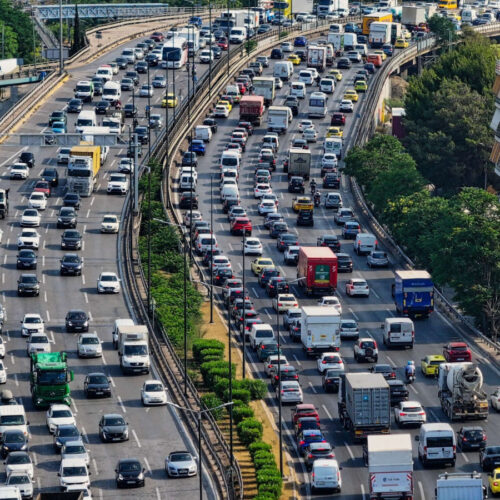
Once again, a digital system with an impressive name is being presented as a “new era” in traffic management: Traffic Commander, together with the operational team “K.O.M.V.O.S.” Its official launch took place on September 1st on the streets of Athens.
The system, the cameras and the technology are integrated, but there is one fundamental question: who will actually be out on the streets when needed?
About four months ago, trials were carried out. The result, based on what was seen at the time, was not what one would expect from a system that aspires to transform traffic management. And today, the problem remains: there are not enough staff shifts to effectively support its operational function.
Traffic in Athens cannot be managed solely through cameras and software. When an accident occurs, when a road is closed, or when a sudden traffic jam develops, a person needs to intervene immediately—not simply a screen recording the problem.
And this is where the great contradiction lies: on the one hand, we are talking about an “integrated digital system,” while on the other hand, there is not enough manpower for it to operate effectively in real time.
If the pilot model was tested four months ago, when there were fewer cars due to the summer holidays, and it did not deliver the expected results, then the answer is not to hold yet another official launch. The real issue is to provide clear answers: What has been fixed since then? How many people will actually staff the shifts? And who will take action when the camera detects the problem?
Because technology alone does not clear traffic jams. Without people, Traffic Commander risks becoming nothing more than an expensive system that watches traffic collapse in real time—and can do nothing about it.
Athens needs effective traffic management, not yet another publicity-driven “launch” in the run-up to elections.